


What is a Taser Circuit?
A taser circuit produces a high AC voltage and low current due to the high impedance. The charge contains a lot of pressure but lacks intensity.
These circuits are used in electroshock devices that deliver a brief, high-voltage pulse.
Type of Taser Circuit
Three taser circuits exist multiplier, spark gap, and thyristor. A multiplier taser, which takes in DC power, consists of high-voltage capacitors, diodes, and a transformer.
Overall, the capacitors generate a lot of noise in the taser.
A spark gap taser, the most affordable yet ineffective option, operates through a spark gap. It also contains a transistor converter that provides a charge to the battery.
Lastly, the thyristor contains a 250-500V capacitor.
It also contains a resistor divider and disc that provides functionality for the taser circuit.
How Does a Taser Circuit Work?
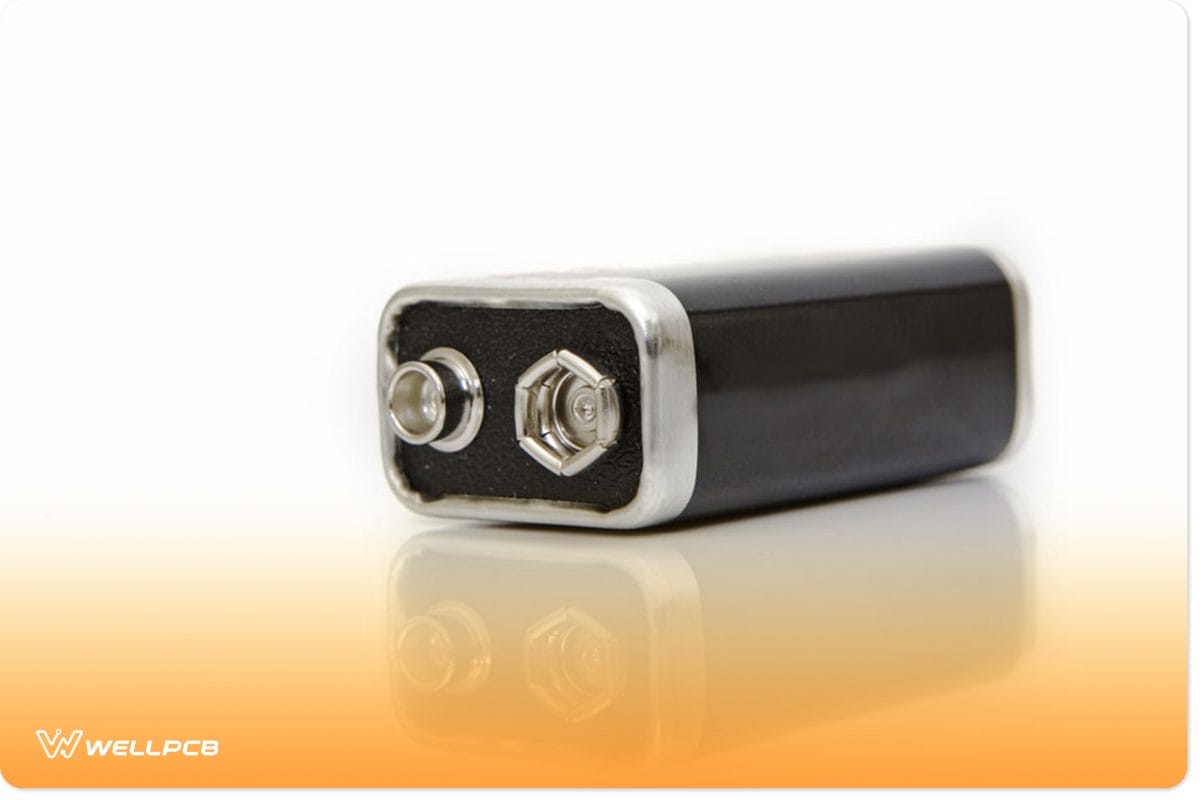
(A 9V battery powers the taser circuit)
The circuit relies on a 9V battery to deliver power to each electrical component, including several transformers, oscillators, and capacitors.
A two-stage conversion process occurs, allowing the circuitry to function.
First, the step-up transformer boosts the battery’s kV input voltage.
In turn, this provides power to the oscillator, which generates sporadic AC waveforms. From there, that current charges the capacitor.
Another transformer receives power after a battery voltage increase of 10-50kV at a rate of 5-40Hz occurs.
After this happens, the stored electricity gets sent to the two conducting metal plates.
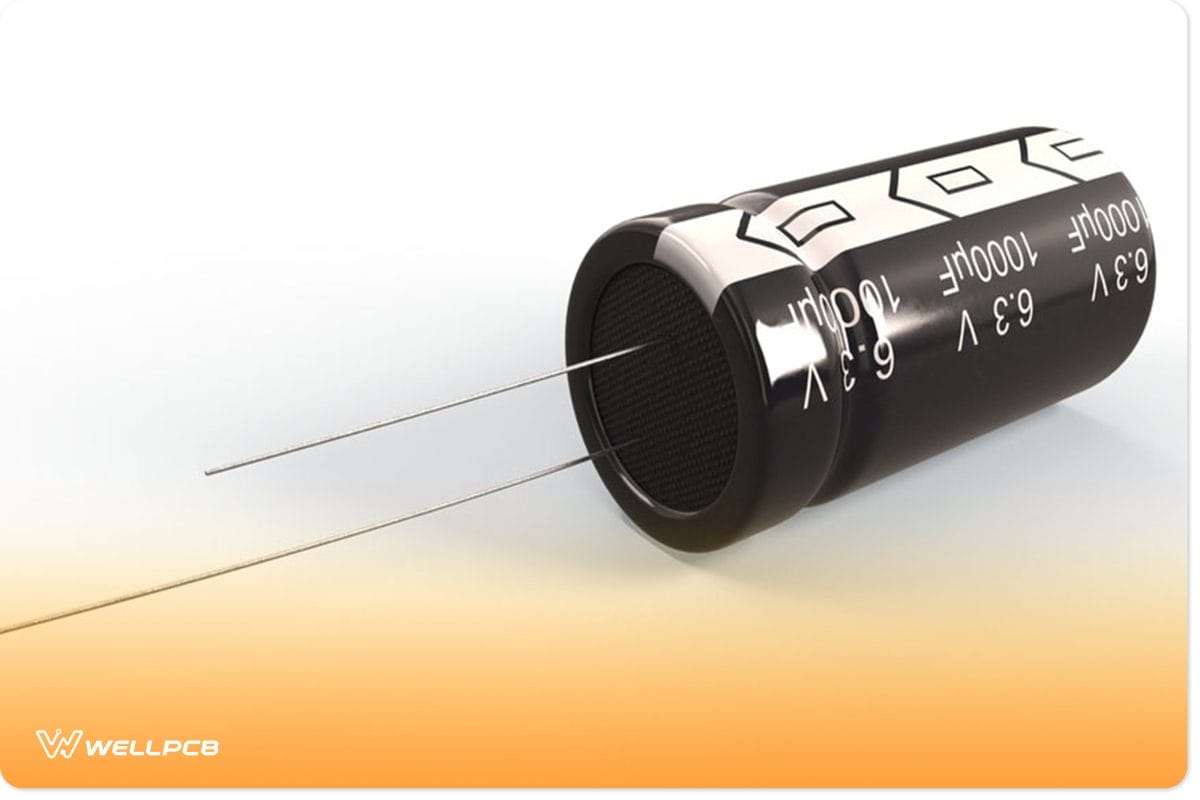
(Current charges the capacitor before it transmits to the circuit’s receiving end)
The two conducting metal plates at the circuit’s output contain a space in between. Because of their specific positioning, the plates hold a high voltage.
When the output touches a surface, the electrical pulses jump from one plate to another.
As a result, the electricity flows directly into the human body’s nervous system, weakening the muscles. However, a 3mA voltage will not inflict damage.
Taser circuits support two settings: probe mode and drive stun mode.
While drive stun mode stops the target, probe mode fires two probes at a subject. Both methods pass electricity into the target.
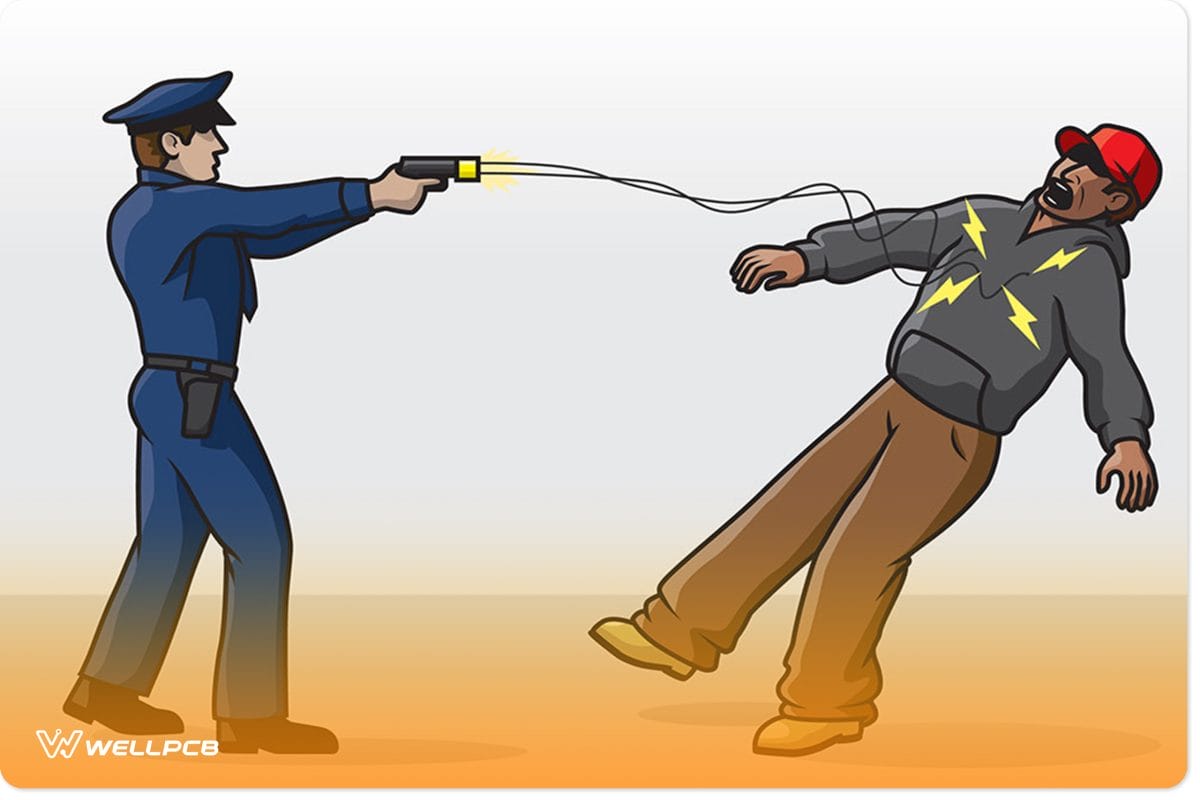
(A taser circuit output with probes)
Taser Circuit Applications
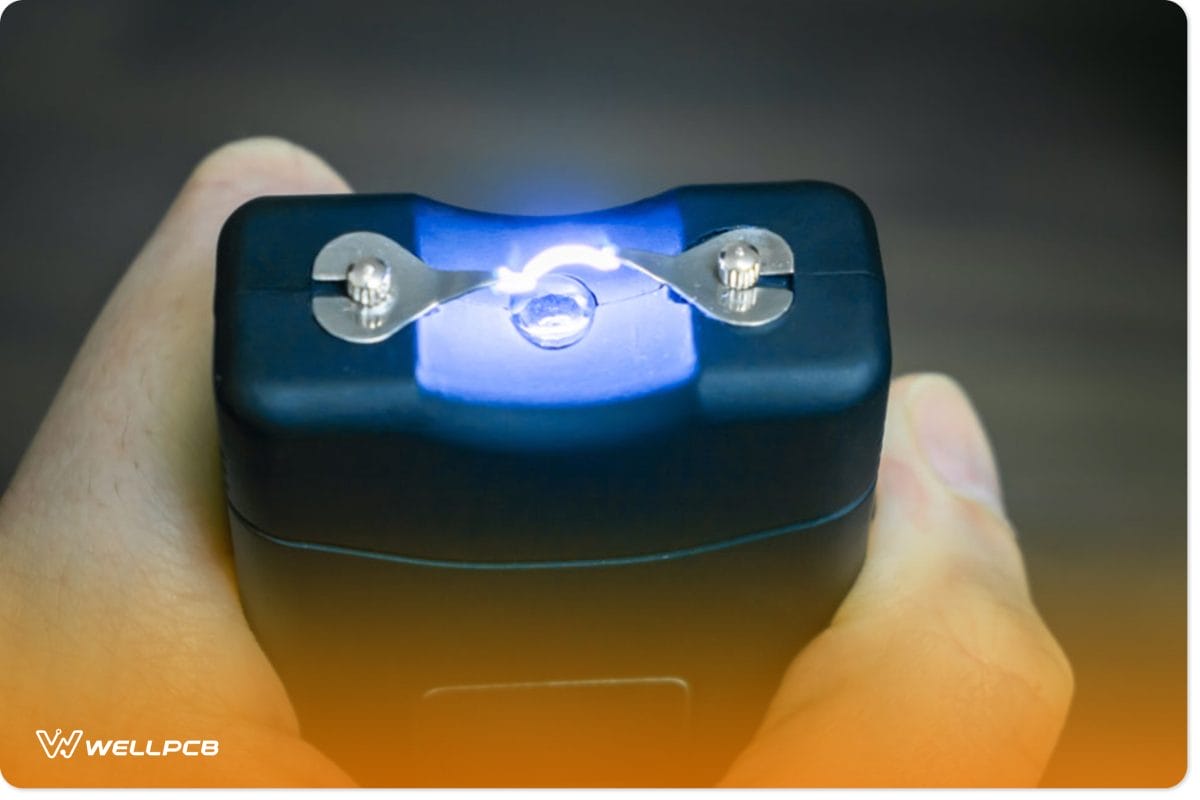
(A taser circuit device)
Taser circuits are used in electroshock devices carried by police and licensed security staff, where local law allows them. The same high-voltage pulse principle also appears in electric fences and insect zappers.
Limitations of Taser Circuit

(Apply caution when working with a taser circuit)
However, some limits still exist. For example, the circuit must generate a high-voltage pulse, making it dangerous.
So, it would be best to remain cautious while integrating it into the device. Corona discharge and stray capacitance will need special consideration.
Otherwise, they could impact the device output voltage.
Touching any part of the output without wearing protection will cause the voltage to transmit an electric shock throughout the body.
As a result, this will impact the nervous system, leading to temporary paralysis or weakness.
People suffering from cardiac issues should avoid working with these circuits. That’s because it may lead to cardiac arrest.
Legal Status and Safety
Tasers and other electroshock devices are restricted or illegal to own, carry or make in many countries, states and cities, so check the law where you live. This article explains how the circuit works; it is not a guide to building one.
The circuit produces dangerous high-voltage pulses that can cause serious injury, especially to people with heart conditions, so only trained professionals should handle one.
Conclusion
A taser circuit turns a low-voltage battery supply into a brief, high-voltage, low-current pulse.
It does this with an oscillator, a step-up transformer and a capacitor that discharges through the output.
Three types exist on the market today, which provide different levels of effectiveness while containing varying electrical components.
Additionally, remain extremely cautious when working with this circuit.
Otherwise, you will end up feeling the shock wave’s full impact.
Feel free to contact us with questions regarding a taser circuit!


